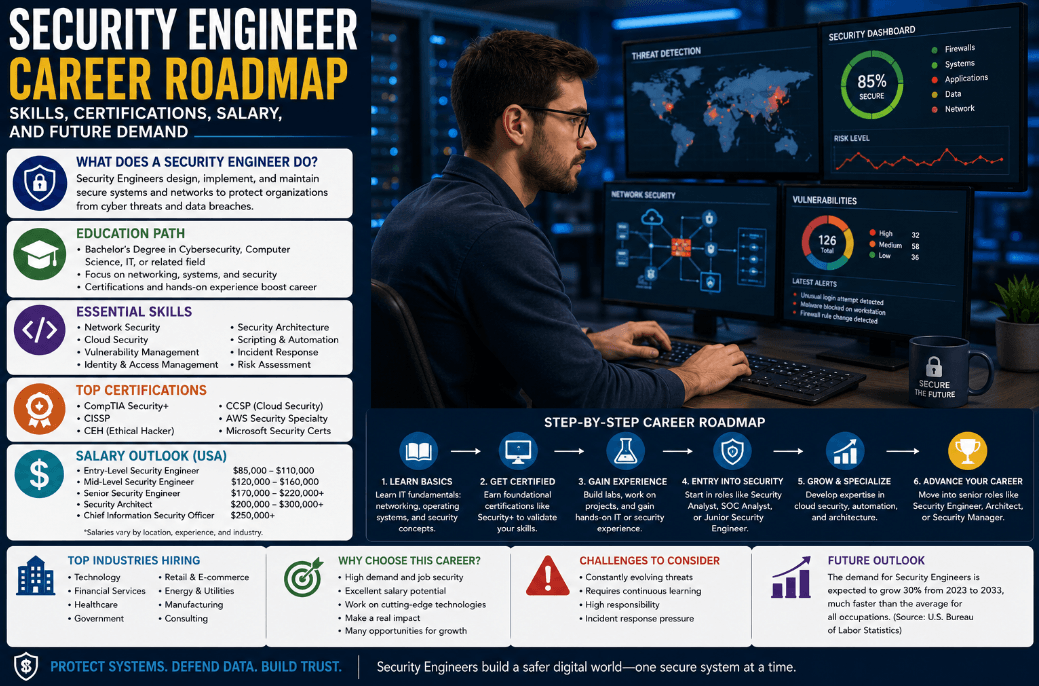
Cybersecurity has become one of the most critical priorities for organizations worldwide. As cyber threats continue evolving and becoming more sophisticated, companies need professionals who can design, implement, and maintain secure systems that protect sensitive information and critical infrastructure. Among the most important professionals in this field are Security Engineers.
Security Engineers play a vital role in building and maintaining the technologies that defend organizations against cyberattacks, data breaches, ransomware incidents, and unauthorized access. They combine technical expertise with strategic thinking to create secure environments that support business operations while minimizing risk.
For individuals interested in technology, cybersecurity, problem-solving, and innovation, Security Engineering offers a rewarding career with strong salaries, long-term stability, and excellent growth opportunities. As businesses continue investing heavily in cybersecurity, Security Engineers remain among the most sought-after professionals in the technology sector.
What Does a Security Engineer Do?
A Security Engineer is responsible for designing, implementing, monitoring, and improving security systems that protect networks, applications, databases, cloud environments, and organizational assets.
Unlike Cybersecurity Analysts, who primarily monitor and investigate threats, Security Engineers focus on building and maintaining security infrastructure that prevents attacks from occurring.
Common responsibilities include:
Designing security architectures
Implementing security controls
Managing firewalls and intrusion prevention systems
Securing cloud environments
Conducting vulnerability assessments
Automating security processes
Monitoring system performance
Supporting incident response efforts
Developing security policies
Testing security solutions
Their work helps organizations maintain strong security postures while supporting business growth and innovation.
Why Demand Is Growing
The demand for Security Engineers continues to rise rapidly across the United States.
Several factors are contributing to this growth:
Increasing cyberattacks
Expansion of cloud computing
Growth of remote work environments
Stricter regulatory requirements
Rising ransomware threats
Artificial intelligence-powered cyber threats
Digital transformation initiatives
Organizations of all sizes require skilled professionals who can build secure systems and protect valuable data.
As cybersecurity budgets continue growing, Security Engineers remain among the most in-demand technology professionals.
Education Requirements
Most Security Engineers begin with a technical educational background.
Common degree options include:
Cybersecurity
Computer Science
Information Technology
Computer Engineering
Information Systems
Software Engineering
However, employers increasingly value practical skills, certifications, and hands-on experience alongside formal education.
Many successful Security Engineers develop expertise through:
Technical training programs
Industry certifications
Cybersecurity boot camps
Home laboratory environments
Professional work experience
Continuous learning is essential because cybersecurity technologies and threats evolve constantly.
Essential Technical Skills
Security Engineers require a broad range of technical competencies.
Network Security
Understanding network architecture, firewalls, VPNs, and intrusion prevention systems is fundamental.
Operating Systems
Professionals must understand Windows, Linux, and cloud-based operating systems.
Cloud Security
Cloud computing continues to grow rapidly.
Knowledge of cloud security principles and platforms is increasingly valuable.
Vulnerability Management
Security Engineers identify, assess, and mitigate system vulnerabilities.
Security Automation
Automation helps improve efficiency and reduce security risks.
Professionals often use scripting and automation tools to strengthen defenses.
Application Security
Understanding secure software development practices helps reduce vulnerabilities in applications.
Identity and Access Management
Managing user permissions and authentication systems is a key component of cybersecurity.
Important Soft Skills
Technical expertise alone is not enough.
Successful Security Engineers also possess strong professional skills.
Important soft skills include:
Problem-solving
Critical thinking
Communication
Adaptability
Collaboration
Attention to detail
Decision-making
Project management
Security professionals often work with technical and non-technical stakeholders, making communication especially important.
Best Certifications for Career Growth
Professional certifications can significantly improve career opportunities.
CompTIA Security+
A strong starting point for cybersecurity professionals entering the field.
Certified Information Systems Security Professional (CISSP)
One of the most respected certifications in cybersecurity.
Certified Cloud Security Professional (CCSP)
Focuses on cloud security and risk management.
Certified Ethical Hacker (CEH)
Provides valuable insight into attacker techniques and security testing.
AWS Security Specialty
Validates expertise in securing cloud environments.
Microsoft Cybersecurity Certifications
Useful for professionals working within Microsoft-based infrastructures.
Combining certifications with practical experience often leads to faster career advancement.
A Typical Day as a Security Engineer
Daily responsibilities vary depending on industry and employer.
A typical workday may include:
Reviewing security alerts
Configuring firewalls
Conducting vulnerability assessments
Implementing security updates
Supporting cloud security projects
Testing security controls
Meeting with IT teams
Investigating security concerns
Developing security policies
Improving system defenses
The work combines technical implementation with strategic planning.
Step-by-Step Career Roadmap
Step 1: Learn Technology Fundamentals
Build strong knowledge of:
Networking
Operating systems
Programming
Cloud computing
System administration
These skills provide the foundation for cybersecurity expertise.
Step 2: Earn Entry-Level Certifications
Security+ is often a valuable starting point.
It demonstrates basic cybersecurity knowledge and commitment to the field.
Step 3: Gain Practical Experience
Hands-on learning is essential.
Build home labs.
Practice with virtual environments.
Explore security tools and technologies.
Step 4: Enter an IT Role
Many professionals begin in positions such as:
Help Desk Technician
Systems Administrator
Network Administrator
Technical Support Specialist
IT Analyst
Step 5: Transition into Cybersecurity
Move into roles such as:
Security Analyst
SOC Analyst
Security Operations Specialist
Junior Security Engineer
Step 6: Develop Security Engineering Expertise
Gain experience with security architecture, cloud security, and infrastructure protection.
Step 7: Pursue Advanced Roles
Career progression may include:
Senior Security Engineer
Cloud Security Engineer
Security Architect
Cybersecurity Manager
Chief Information Security Officer
Salary Expectations in the United States
Security Engineering offers some of the highest salaries in technology.
Typical salary ranges include:
Entry-Level Security Engineer: $85,000–$110,000
Mid-Level Security Engineer: $120,000–$160,000
Senior Security Engineer: $170,000–$220,000+
Cloud Security Engineer: $180,000–$250,000+
Security Architect: $200,000–$300,000+
Chief Information Security Officer: $250,000+
Compensation varies based on experience, certifications, location, and specialization.
Industries Hiring Security Engineers
Security Engineers are needed across numerous sectors.
Technology
Technology companies invest heavily in cybersecurity infrastructure.
Financial Services
Banks and financial institutions require advanced security systems.
Healthcare
Healthcare organizations protect sensitive patient information.
Government
Government agencies employ security professionals to protect critical systems.
Energy and Utilities
Infrastructure protection is a major priority.
Retail and E-Commerce
Online businesses depend on secure digital environments.
Manufacturing
Industrial organizations increasingly require cybersecurity expertise.
Security Engineer vs Cybersecurity Analyst
These careers often overlap but serve different functions.
Cybersecurity Analysts primarily monitor, investigate, and respond to threats.
Security Engineers focus on designing and implementing security infrastructure.
Analysts identify security issues, while engineers build systems to prevent them.
Both roles offer excellent career opportunities and often work closely together.
Common Mistakes Beginners Make
Ignoring Networking Fundamentals
Networking knowledge forms the foundation of cybersecurity.
Chasing Certifications Without Experience
Hands-on skills are equally important.
Focusing Only on Security Tools
Understanding security concepts is more valuable than memorizing software interfaces.
Avoiding Cloud Technologies
Cloud security expertise is increasingly important.
Neglecting Communication Skills
Technical professionals must communicate effectively with teams and leadership.
Advantages of This Career
Security Engineering offers numerous benefits.
High earning potential
Strong job demand
Career flexibility
Remote work opportunities
Continuous learning
Industry diversity
Long-term stability
Professional growth
These advantages make Security Engineering one of the most attractive careers in technology.
Challenges to Consider
The profession also presents challenges.
Rapidly evolving threats
Continuous learning requirements
High responsibility levels
Complex technical environments
Pressure during security incidents
Changing technologies
Many professionals find these challenges rewarding because they contribute to meaningful and impactful work.
Future Outlook and Job Growth
The future remains exceptionally bright for Security Engineers.
Organizations continue to increase investments in cybersecurity due to growing digital risks. Cloud adoption, artificial intelligence, remote work, and regulatory requirements are expected to create ongoing demand for skilled professionals.
Security Engineers who develop expertise in cloud security, automation, and advanced threat protection will likely enjoy strong career opportunities for many years to come.
How to Get Started
Aspiring Security Engineers should begin by building strong technical foundations.
Learn networking and operating systems.
Study cybersecurity fundamentals.
Earn certifications.
Build practical projects.
Gain IT experience.
Explore cloud security technologies.
Continue learning and developing new skills.
Consistent effort and hands-on experience often lead to long-term success.
Conclusion
Security Engineers play a critical role in protecting organizations from cyber threats and maintaining secure digital environments. Their expertise helps businesses safeguard sensitive information, comply with regulations, and support operational continuity.
For individuals interested in technology, cybersecurity, and problem-solving, Security Engineering offers an exciting and financially rewarding career path. With strong salaries, excellent job demand, and continuous opportunities for growth, the profession remains one of the most valuable careers in the modern technology landscape.
FAQs
Is Security Engineering a good career in 2026?
Yes. Security Engineering remains one of the fastest-growing and highest-paying technology careers.
Do Security Engineers need a degree?
A degree is helpful, but many employers also value certifications, technical skills, and practical experience.
What certification should I earn first?
CompTIA Security+ is often recommended as a starting certification.
Can Security Engineers work remotely?
Yes. Many organizations offer remote and hybrid cybersecurity positions.
Can Security Engineers earn six-figure salaries?
Yes. Many Security Engineers reach six-figure incomes early in their careers, and senior professionals often earn significantly more.






Be First to Comment