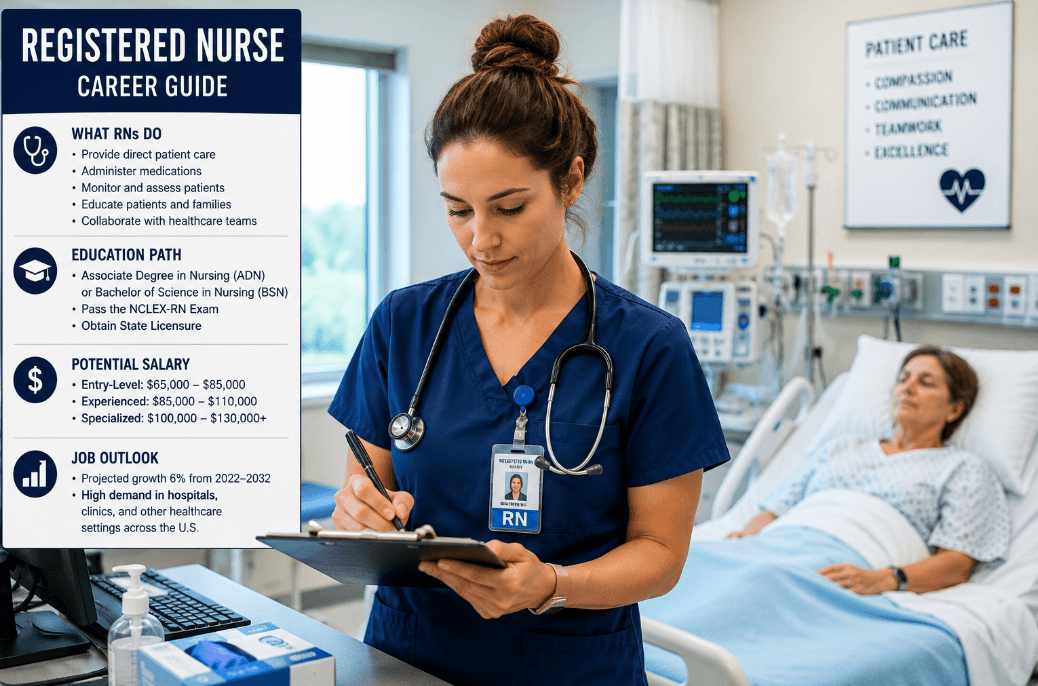
Registered Nurses are among the most important healthcare professionals in the United States. They serve as the foundation of patient care, working directly with individuals, families, physicians, and healthcare teams to improve health outcomes and provide essential medical support.
As healthcare systems continue expanding and the population ages, the demand for qualified Registered Nurses remains exceptionally strong. Hospitals, clinics, rehabilitation centers, schools, government agencies, and private healthcare organizations all rely on skilled nursing professionals to deliver high-quality care.
For individuals seeking a meaningful career that combines job stability, strong earning potential, and opportunities for professional growth, becoming a Registered Nurse can be an excellent choice. Nursing offers multiple specialization options, flexible work environments, and a clear path toward advanced healthcare roles.
What Does a Registered Nurse Do?
A Registered Nurse, commonly known as an RN, is responsible for providing direct patient care, monitoring health conditions, administering medications, assisting with treatments, and educating patients about medical conditions and recovery plans.
Registered Nurses serve as a critical link between patients and healthcare providers.
Common responsibilities include:
Monitoring patient conditions
Administering medications
Recording medical information
Assisting physicians during procedures
Educating patients and families
Performing health assessments
Developing patient care plans
Operating medical equipment
Responding to emergencies
Supporting healthcare teams
Nurses often spend more time with patients than any other healthcare professional, making communication and patient advocacy important aspects of the role.
Why Demand Is Growing
The demand for Registered Nurses continues to grow due to several factors.
An aging population requires more healthcare services.
Chronic health conditions are becoming more common.
Healthcare facilities are expanding their services.
Preventive care and wellness programs are increasing.
Many experienced nurses are approaching retirement.
Healthcare providers continue facing workforce shortages.
As a result, employers across the country actively recruit qualified nursing professionals.
This strong demand creates excellent employment opportunities for both new graduates and experienced nurses.
Education Requirements
Several educational pathways can lead to becoming a Registered Nurse.
Associate Degree in Nursing (ADN)
An Associate Degree in Nursing is one of the fastest routes into the profession.
Many community colleges offer ADN programs that prepare students for nursing licensure.
Bachelor of Science in Nursing (BSN)
A Bachelor of Science in Nursing is increasingly preferred by healthcare employers.
BSN programs provide more comprehensive training in leadership, research, public health, and patient care.
Accelerated Nursing Programs
Individuals with degrees in other fields may qualify for accelerated nursing programs that allow them to transition into healthcare careers more quickly.
Nursing Licensure
After completing nursing education, candidates must pass the NCLEX-RN examination to become licensed Registered Nurses.
Licensure is required to practice professionally.
Essential Clinical Skills
Successful nurses develop a wide range of clinical competencies.
Patient Assessment
Evaluating patient conditions accurately is a fundamental nursing responsibility.
Medication Administration
Nurses must understand medications, dosages, side effects, and safety procedures.
Clinical Documentation
Accurate record-keeping supports patient care and regulatory compliance.
Emergency Response
Many nurses are trained to respond quickly during medical emergencies.
Infection Control
Healthcare professionals follow strict procedures to prevent infections and protect patients.
Medical Equipment Operation
Modern healthcare environments require familiarity with various technologies and monitoring devices.
Important Soft Skills
Nursing requires strong interpersonal abilities in addition to clinical expertise.
Important soft skills include:
Communication
Empathy
Critical thinking
Problem-solving
Teamwork
Time management
Adaptability
Attention to detail
Patients often remember how nurses made them feel during challenging situations, making emotional intelligence particularly valuable.
Best Certifications for Career Growth
Professional certifications can help nurses specialize and advance their careers.
Basic Life Support (BLS)
Often required for entry-level nursing positions.
Advanced Cardiovascular Life Support (ACLS)
Common for nurses working in emergency and critical care environments.
Pediatric Advanced Life Support (PALS)
Beneficial for professionals caring for infants and children.
Certified Emergency Nurse (CEN)
Designed for emergency department nurses.
Critical Care Registered Nurse (CCRN)
Recognized certification for critical care specialists.
Specialized certifications can improve career opportunities and earning potential.
A Typical Day as a Registered Nurse
The daily responsibilities of nurses vary depending on workplace settings and specialties.
A typical day may include:
Checking patient vital signs
Administering medications
Assisting with treatments
Updating medical records
Communicating with physicians
Educating patients
Monitoring recovery progress
Responding to emergencies
Supporting patient families
Coordinating care plans
No two shifts are exactly alike, which many nurses find rewarding and engaging.
Step-by-Step Career Roadmap
Step 1: Complete Nursing Education
Choose an ADN or BSN program and build foundational healthcare knowledge.
Step 2: Pass the NCLEX-RN Examination
Completing the licensing examination is required to become a Registered Nurse.
Step 3: Obtain State Licensure
Apply for nursing licensure in your state.
Step 4: Gain Clinical Experience
Work in hospitals, clinics, long-term care facilities, or other healthcare settings.
Step 5: Explore Specializations
Common nursing specialties include:
Emergency Nursing
Pediatric Nursing
Critical Care Nursing
Oncology Nursing
Surgical Nursing
Mental Health Nursing
Cardiac Nursing
Step 6: Earn Professional Certifications
Advanced certifications can strengthen expertise and career opportunities.
Step 7: Advance Professionally
Experienced nurses may pursue roles such as:
Charge Nurse
Nurse Manager
Clinical Educator
Nurse Practitioner
Healthcare Administrator
Salary Expectations in the United States
Registered Nurses earn competitive salaries with opportunities for advancement.
Typical salary ranges include:
Entry-Level Registered Nurse: $65,000–$85,000
Experienced Registered Nurse: $85,000–$110,000
Specialized Registered Nurse: $100,000–$130,000+
Travel Nurse: $100,000–$150,000+
Nurse Manager: $110,000–$160,000+
Salary levels vary based on location, employer, experience, certifications, and specialty area.
Industries Hiring Registered Nurses
Nurses work in a wide variety of healthcare settings.
Hospitals
Hospitals remain the largest employers of Registered Nurses.
Outpatient Clinics
Many nurses provide care in physicians’ offices and specialty clinics.
Long-Term Care Facilities
Nursing homes and rehabilitation centers employ large numbers of nurses.
Schools and Universities
Educational institutions often hire nurses to support student health services.
Government Agencies
Public health departments and federal agencies employ nursing professionals.
Home Healthcare
Home health services continue growing as more patients receive care outside hospitals.
Telehealth Services
Remote healthcare opportunities are expanding for qualified nurses.
Registered Nurse vs Nurse Practitioner
These two careers are closely related but differ significantly.
Registered Nurses focus primarily on patient care and clinical support.
Nurse Practitioners receive advanced education and can diagnose conditions, prescribe medications, and provide expanded healthcare services.
Many Nurse Practitioners begin their careers as Registered Nurses before pursuing graduate education.
Common Mistakes Beginners Make
Ignoring Self-Care
Nursing can be physically and emotionally demanding.
Maintaining personal well-being is essential.
Poor Time Management
An effective organization helps nurses manage multiple responsibilities.
Avoiding Continuing Education
Healthcare practices evolve constantly.
Ongoing learning supports professional growth.
Weak Communication Skills
Clear communication improves patient outcomes and teamwork.
Rushing Clinical Development
Building strong clinical foundations early in a career is important.
Advantages of This Career
Registered Nurses enjoy many professional benefits.
Strong job demand
Career stability
Meaningful patient interactions
Competitive salaries
Flexible work environments
Multiple specialization options
Opportunities for advancement
Professional respect
These advantages contribute to high career satisfaction among many nurses.
Challenges to Consider
Nursing also presents challenges.
Long shifts
Emotional stress
Physical demands
Staffing shortages
Exposure to illness
Complex patient situations
Many professionals find these challenges worthwhile because they make a meaningful difference in people’s lives.
Future Outlook and Job Growth
The future outlook for Registered Nurses remains highly positive.
Healthcare systems continue expanding to meet increasing patient demand. Population growth, aging demographics, and advances in medical treatment are expected to support long-term employment opportunities.
Nurses with specialized skills, certifications, and advanced education will likely remain especially valuable.
The profession continues to offer strong career security and advancement potential.
How to Get Started
Aspiring nurses should begin by researching accredited nursing programs.
Develop strong science and healthcare knowledge.
Complete nursing education.
Pass licensing examinations.
Gain clinical experience.
Explore specialty interests.
Pursue professional certifications.
Commit to lifelong learning.
A structured approach can help build a successful and rewarding nursing career.
Conclusion
Registered Nurses are essential healthcare professionals who provide compassionate care, support medical teams, and improve patient outcomes. Their work impacts millions of lives every day and remains critical to the success of healthcare systems across the United States.
For individuals seeking a stable, meaningful, and financially rewarding profession, nursing offers excellent opportunities for growth and long-term success. With strong demand, diverse career paths, and opportunities for advancement, Registered Nursing remains one of the most respected and valuable careers in healthcare.
FAQs
Is becoming a Registered Nurse worth it?
Yes. Nursing offers strong job security, competitive salaries, meaningful work, and opportunities for advancement.
How long does it take to become a Registered Nurse?
The timeline depends on the educational pathway chosen, but nursing programs typically require several years of study and training.
Can Registered Nurses earn six-figure salaries?
Yes. Experienced nurses, travel nurses, and specialized nursing professionals can earn six-figure incomes.
What is the difference between an RN and a BSN?
RN refers to licensure, while BSN refers to a Bachelor of Science in Nursing degree.
Are Registered Nurses in high demand?
Yes. Registered Nurses remain among the most in-demand healthcare professionals in the United States.







Be First to Comment